
Introduction: The Dream That Aimed to Change Indian Mobility
The Tata Nano wasn’t just another car launch — it was a dream on wheels. When Ratan Tata unveiled it in 2008, the world paused to watch India attempt something extraordinary. The vision was simple yet revolutionary: give millions of Indian families a safe, dignified alternative to scooters at a price point that seemed almost impossible — around ₹1 lakh. At a time when families of four squeezed onto two-wheelers, the Nano promised comfort, safety, and pride. International media hailed it as the “People’s Car,” a marvel of engineering, and a symbol of India’s rising innovation. Bookings poured in, hope soared, and the Nano became a beacon of possibility. But dreams don’t always translate into reality. Despite the hype, the Nano stumbled, and its story became one of the most talked-about business lessons in automotive history
Understanding the Vision: Why Tata Nano Was Created
India in the early 2000s was buzzing with economic growth, yet car ownership remained a luxury. Roads were dominated by two-wheelers, often unsafe for families. Tata Motors saw this gap and dared to democratize mobility.
The Nano was built with ingenious cost-saving measures: lightweight materials, simplified mechanics, a rear-engine layout, and minimalistic interiors. Every detail was designed to keep costs low without stripping away the essence of mobility. From an engineering standpoint, it was groundbreaking.
But cars aren’t just machines — they’re symbols. And perception would prove to be Nano’s biggest hurdle.
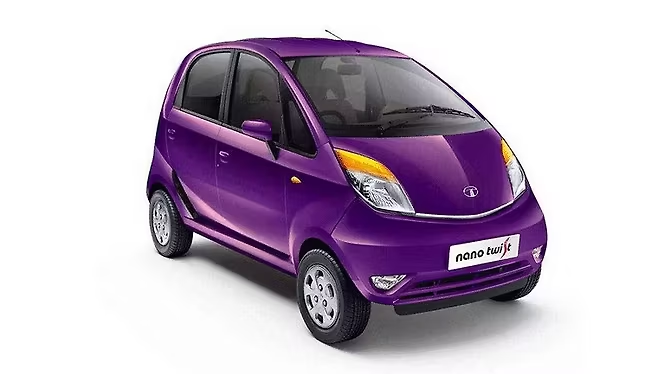
Why Tata Nano Failed in India : A Deep Market Analysis
- The Psychological Barrier of the “Cheapest Car”
Ironically, the Nano’s biggest selling point — its affordability — became its downfall. In India, buying a car is more than a purchase; it’s a statement of progress. Instead of pride, many felt Nano ownership screamed financial struggle.Consumers gravitated toward slightly pricier options like the Maruti Suzuki Alto, which carried more aspirational value.
- Safety Concerns and Brand Trust Challenges
The dream took another hit when reports of Nano cars catching fire surfaced. Though Tata Motors quickly addressed the issues, the damage was done. Trust in automobiles is fragile, and once shaken, it rarely recovers.
- Limited Features and Changing Expectations
Indian buyers were evolving fast. They wanted air conditioning that worked well, power steering, infotainment systems, and interiors that felt premium. The Nano, in comparison, felt bare-bones. Later upgrades came, but by then, the first impression had already stuck.
- Marketing Missteps
Marketing leaned too heavily on price. Cars aren’t sold as commodities; they’re sold as dreams. Instead of positioning Nano as a smart, futuristic city car, campaigns kept hammering “cheap.” That stripped away its aspirational edge.
The End of Production : When a Vision Paused -
By 2018, declining demand led Tata Motors to discontinue the Tata Nano, bringing an ambitious automotive revolution to a quiet end. However, experts widely believe that Nano was never an engineering failure but rather a product launched ahead of its time, affected by market perception, positioning, and consumer mindset. While Indian buyers earlier associated cars with status and aspiration, today’s mobility needs have shifted toward affordability, efficiency, and sustainability. Interestingly, the Nano’s compact design, low running cost, and urban practicality perfectly align with the modern electric vehicle ecosystem, making its concept more relevant now than ever in India’s rapidly growing EV revolution.
Tata Nano EV : India’s Smart Electric Comeback Story
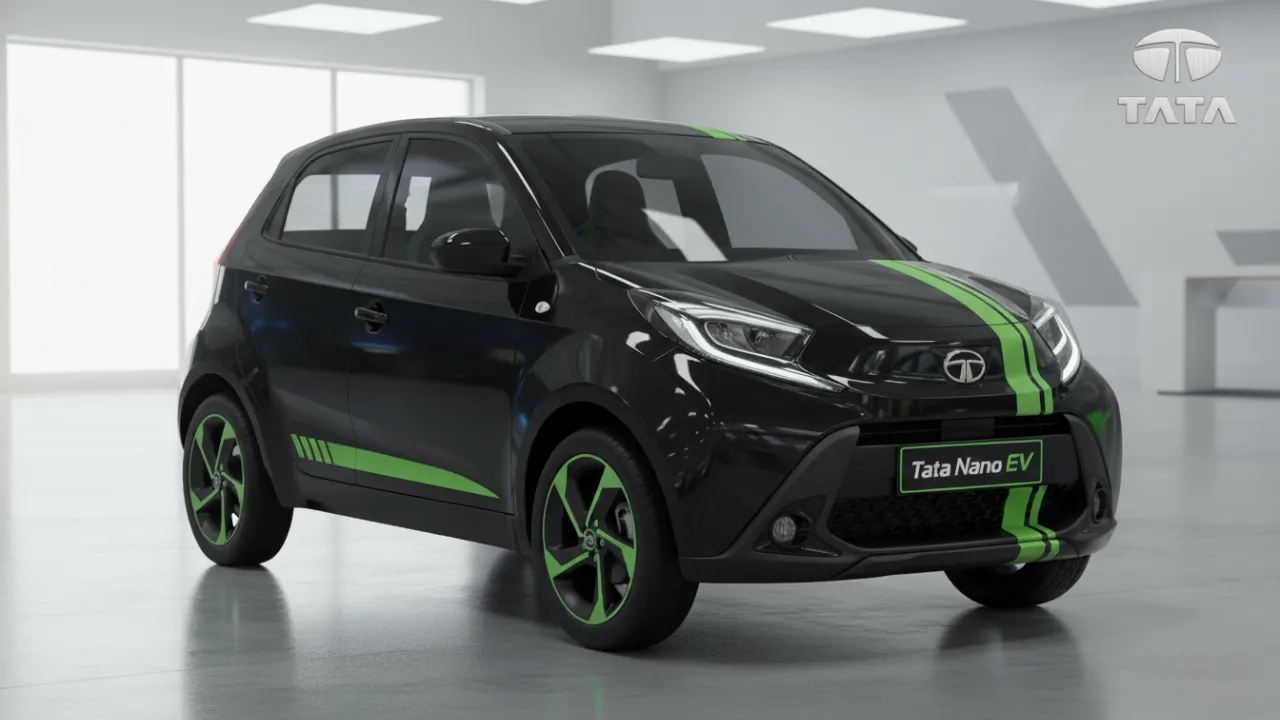
The Electric Revolution Changing India
Fast forward to today, and India is in the midst of a profound mobility transformation. Rising fuel costs have made traditional petrol and diesel vehicles increasingly expensive to run, while growing urban pollution levels have pushed both policymakers and consumers to look for cleaner alternatives. Climate change concerns are no longer abstract — Indian cities routinely battle hazardous air quality, and reducing vehicular emissions has become a national priority.
Government initiatives have played a crucial role in accelerating this shift. Programs like FAME (Faster Adoption and Manufacturing of Hybrid and Electric Vehicles), subsidies on EV purchases, reduced GST rates on electric cars, and investments in charging infrastructure have created a supportive ecosystem for electric mobility. State governments have also introduced their own EV policies, offering incentives such as road tax exemptions, registration fee waivers, and subsidies for setting up charging stations.At the same time, consumer attitudes have evolved dramatically. Unlike in 2008, when affordability was equated with compromise, today’s buyers see electric vehicles as smart, future-ready investments. The appeal lies not just in sustainability but also in long-term cost savings — EVs promise lower running costs, reduced maintenance, and independence from volatile fuel prices. For urban commuters, the convenience of home charging adds another layer of practicality.
Expected Tata Nano EV Specifications and Features -
Industry discussions suggest the Nano EV will be designed for city commuting, with a driving range of 150–250 km per charge — ideal for office travel and short trips. It is expected to feature lithium-ion batteries, regenerative braking, digital dashboards, smartphone connectivity, and enhanced safety. Its compact dimensions will make it a natural fit for India’s congested streets and tight parking spaces. Charging convenience will be a major advantage. With home charging options, families could power the Nano EV overnight at minimal electricity costs, making it one of the most practical EVs for urban households.
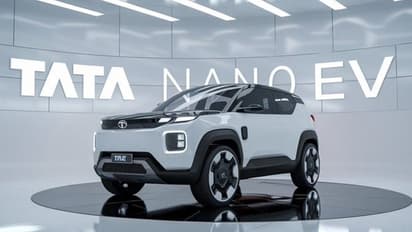
Why Tata Nano EV Can Succeed Today
Unlike 2008, when car ownership was still tied heavily to social status and aspirational value, today’s buyers are far more pragmatic. Modern consumers prioritize practicality, sustainability, and long-term cost efficiency over mere prestige. Rising fuel prices have made petrol and diesel cars expensive to maintain, while electric vehicles offer a compelling alternative with lower running costs, reduced maintenance, and independence from volatile fuel markets.
EVs are no longer seen as “budget compromises” — they are viewed as intelligent, future-ready investments. For young professionals, urban commuters, and environmentally conscious families, owning an EV signals smart decision-making and alignment with global sustainability trends.
Government incentives have further tilted the scales. Subsidies under the FAME II scheme, reduced GST rates on EVs, and state-level benefits like road tax waivers and registration fee exemptions make electric cars financially attractive. Meanwhile, India’s charging infrastructure is expanding rapidly, with public charging stations appearing in malls, office complexes, and highways, while home charging solutions provide unmatched convenience.
Tata Motors’ Transformation : Learning from the Past
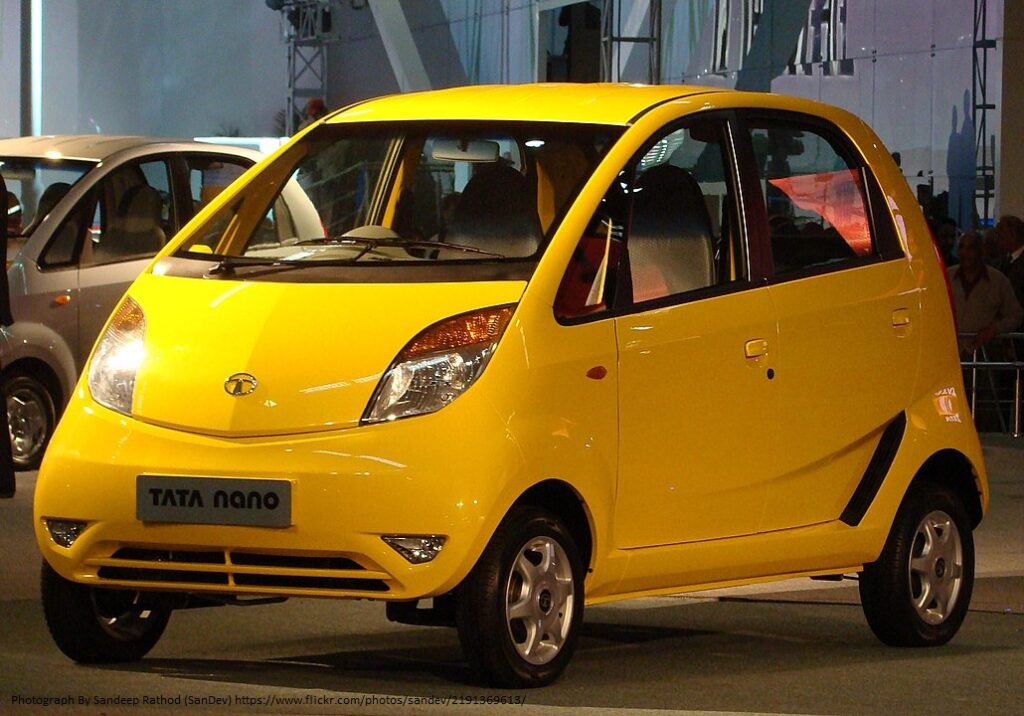
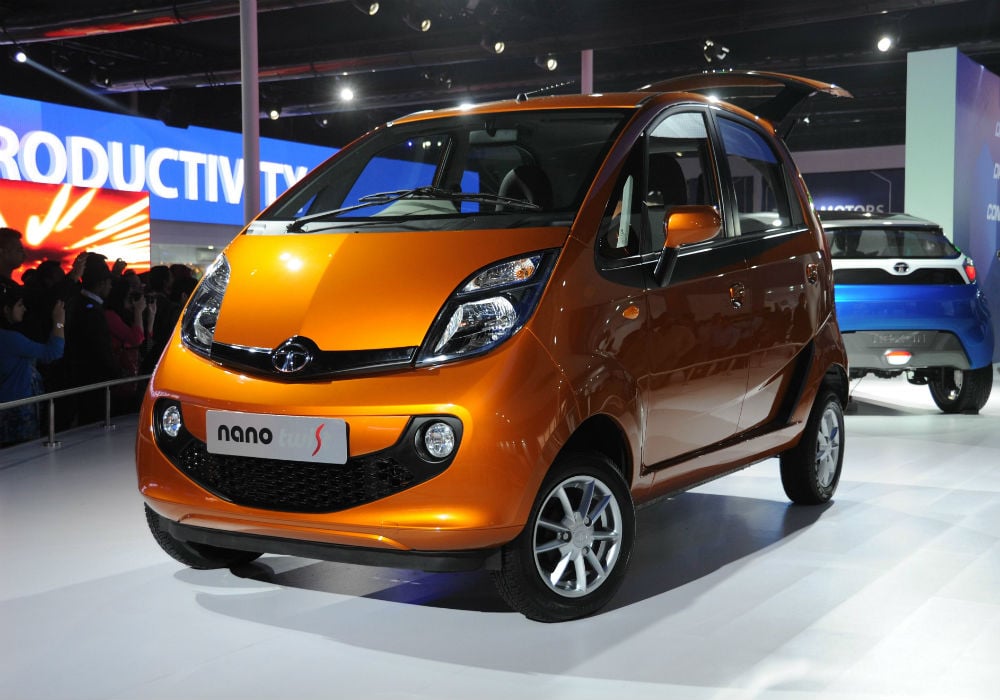
Over the past decade, Tata Motors has undergone a remarkable transformation. Once criticized for basic designs and inconsistent quality, the company now consistently delivers vehicles with modern styling, premium interiors, and globally competitive safety ratings. Models like the Tata Harrier, Safari, and Nexon have reshaped consumer perception, proving that Tata can produce cars that are aspirational as well as reliable.In the EV segment, Tata has already established dominance. The Nexon EV became India’s best-selling electric SUV, while the Tiago EV and Punch EV have expanded the portfolio to cover hatchbacks and compact SUVs. These successes have rebuilt consumer trust and positioned Tata as the leader in India’s EV revolution.
The lessons from the Nano’s first chapter — about the importance of perception, aspirational marketing, and timing — are now deeply ingrained in Tata’s strategy. The company understands that cars must sell not just on affordability but on emotional appeal, lifestyle fit, and future readiness. This maturity gives the Nano EV a much stronger foundation for success.
The Future Impact : Affordable EV for Every Indian
If the Nano EV succeeds, its impact could be transformative. It has the potential to become India’s first true mass-market electric car, bridging the gap between two-wheelers and premium EVs. For millions of families who currently rely on scooters or motorcycles, the Nano EV could be their first step into car ownership — offering safety, comfort, and sustainability at an accessible price.This democratization of electric mobility could reshape India’s urban transport ecosystem. Imagine congested city streets filled with compact, zero-emission cars instead of polluting two-wheelers. The Nano EV could reduce traffic emissions, improve air quality, and make cities more livable.Beyond environmental benefits, the Nano EV would fulfill Ratan Tata’s original mission: to provide safe, affordable, and dignified mobility to ordinary Indian families. What began as a dream in 2008 could finally find its true moment in the electric era.
More than just a comeback, the Nano EV could become a symbol of India’s progress — proof that innovation, when timed right, can change lives. It would stand as one of the greatest turnaround stories in automotive history, transforming a past failure into a future triumph.
Conclusion : From Failure to Future Innovation
The Nano’s journey is a testament to the fact that innovation alone cannot guarantee success — timing, perception, and consumer psychology are equally decisive. When it first launched in 2008, the Nano was ahead of its time, but India wasn’t ready for a car marketed as the “world’s cheapest.” The cultural context of car ownership then was rooted in aspiration and status, and the Nano’s positioning clashed with that sentiment. Yet, in today’s era of electric mobility, the same qualities that once limited its appeal — compact size, affordability, and simplicity — now align perfectly with the needs of modern urban India. Rising fuel costs, environmental concerns, and government EV incentives have reshaped consumer priorities, making practicality and sustainability more important than prestige. If Tata Motors successfully reintroduces the Nano as an EV, it could transform from a symbol of failure into a story of resilience and reinvention, marketed not as the cheapest car but as the smartest city mobility solution. Its success would democratize electric mobility, offering millions of families their first safe, dignified car while reducing emissions and easing urban congestion. More than just a comeback, the Nano EV would fulfill Ratan Tata’s original mission and stand as one of the greatest turnaround stories in automotive history — proof that even a setback can evolve into a triumph when the moment is right.